The new year opens under the sign of the Fiery Horse — a symbol of movement, inner strength, renewal, and courage.
In art, the horse is never just an animal. It is energy, memory, freedom, and the quiet force that carries humanity forward through time.
For artists, collectors, and galleries, the horse remains one of the most timeless and emotionally powerful subjects in fine art.
The Horse in Art: A Universal and Eternal Symbol
From prehistoric cave drawings to contemporary painting, the horse has always walked beside humanity — physically, spiritually, and visually. In art, it represents far more than anatomy or motion.Across cultures, the horse symbolizes:
- freedom and direction
- dignity and inner power
- the bond between humans and nature
- time, destiny, and transition
In the context of Eastern Europe and Ukraine, the horse carries an additional meaning: the soul of the land, Cossack freedom, endurance, and silent strength.
The Fiery Horse as a Symbol of Transformation
The image of the Fiery Horse is not about destruction.
It is about purification, momentum, and transformation — fire as creative force.
In visual art, a horse in fiery or red tones often reflects:
- dramatic change
- spiritual tension
- historical turning points
- raw, uncontrollable energy
This symbolism feels especially relevant today — both globally and personally — as artists and viewers search for meaning, resilience, and truth.
The Horse in Art: A Universal but Deeply Rooted Symbol
From ancient cave drawings to contemporary painting, the horse has always been present in human visual culture. In art, it represents far more than anatomy or speed.
Across cultures, the horse symbolizes:
- freedom and direction
- dignity and inner power
- the bond between humans and nature
- time, transition, and destiny
Yet in Ukrainian culture, the horse carries a particularly profound meaning — the soul of the steppe, Cossack freedom, endurance, and silent strength.
Horses in the Works of Ukrainian Artists
For Ukrainian artists, the horse is not an exotic subject — it is part of the part of the national memory.
In Ukrainian art, the horse often appears as:
- the companion of the Cossack
- a symbol of freedom and open steppe
- a sign of loyalty and shared fate
- a quiet witness of history
In folk art, icon painting, classical and contemporary Ukrainian painting, the horse carries dignity without arrogance and strength without cruelty. It is not a decorative motif but a living participant in human destiny.
Today, many contemporary Ukrainian artists return to this image through the lens of war, loss, resilience, and hope. The horse becomes a symbol not of nostalgia, but of forward movement despite pain — a true Fiery Horse of our time.
Horses in Ukrainian Art: Freedom Without Noise
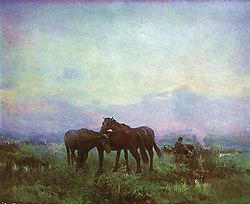

For Ukrainian artists, the horse is not decorative. It is existential.
Serhii Vasylkivsky
His horses belong to the steppe itself.
They move quietly through vast landscapes, often alongside Cossacks, carrying a sense of space, freedom, and dignity. There is no theatrical drama — only inner strength and belonging to the land.
Mykola Samokysh
A master of motion and anatomy.
His horses are powerful, alive, and technically brilliant, revealing deep professional knowledge and respect for the animal’s body and energy.
Folk and sacred traditions
In Ukrainian folk art, embroidery, icon painting, and decorative arts, the horse often appears as:
- a companion
- a guardian
- a symbol of the road and fate
This is not a horse of conquest, but a horse of shared destiny.
Today, many contemporary Ukrainian artists return to this image through the lens of war, loss, memory, and hope. The horse becomes a symbol of movement forward despite pain — a modern Fiery Horse.
The Most Influential Horse Paintings in Art History
A short canon of masterpieces every artist and collector should know:
- Whistlejacket — George Stubbs
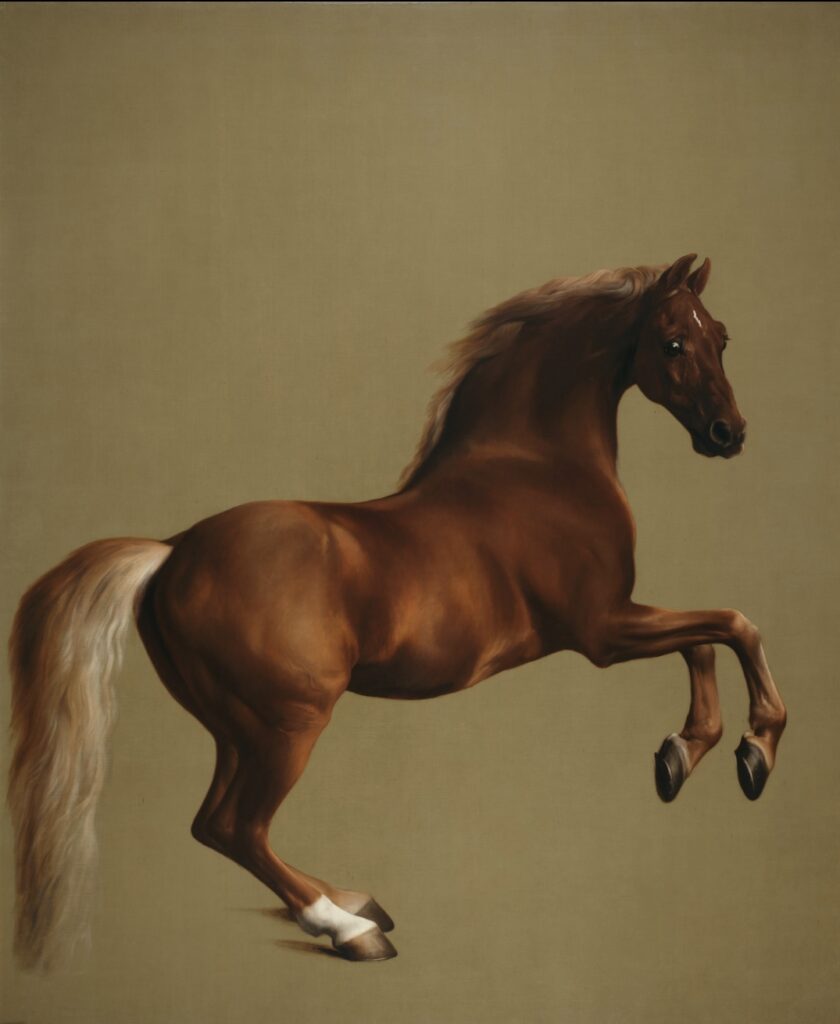
A monumental horse portrait without rider or background. Pure presence, anatomy, and dignity.
The highest auction prices for horse paintings, however, belong mainly to works by George Stubbs, whose equestrian paintings have exceeded $30 million USD at auction.
- Napoleon Crossing the Alps — Jacques-Louis David
The horse as theatrical power and political myth.

- The Horse Fair — Rosa Bonheur Motion, realism, and deep respect for animal strength.

- Guernica — Pablo Picasso The horse as the screaming witness of war and human suffering.

- Blue Horse I — Franz Marc The horse as spiritual purity and emotional color.
Reproductions and References: Where Images Come From (and Why It Matters)
When writing about famous artworks, it is important to be transparent and respectful of sources.
High-quality reference images and reproductions are typically taken from:
- museum open-access collections
- public domain archives
- trusted art history platforms
Commonly used sources include major museums and educational archives that provide images for study, reference, and inspiration. When publishing articles, it is good practice to credit museums or platforms via links, especially if images are embedded.
For artists, these references are not about copying — they are about visual education, historical continuity, and dialogue with the past.
My Own Work: The Horse as Memory and Inner Fire
In my own artistic practice, the image of the horse is deeply personal.
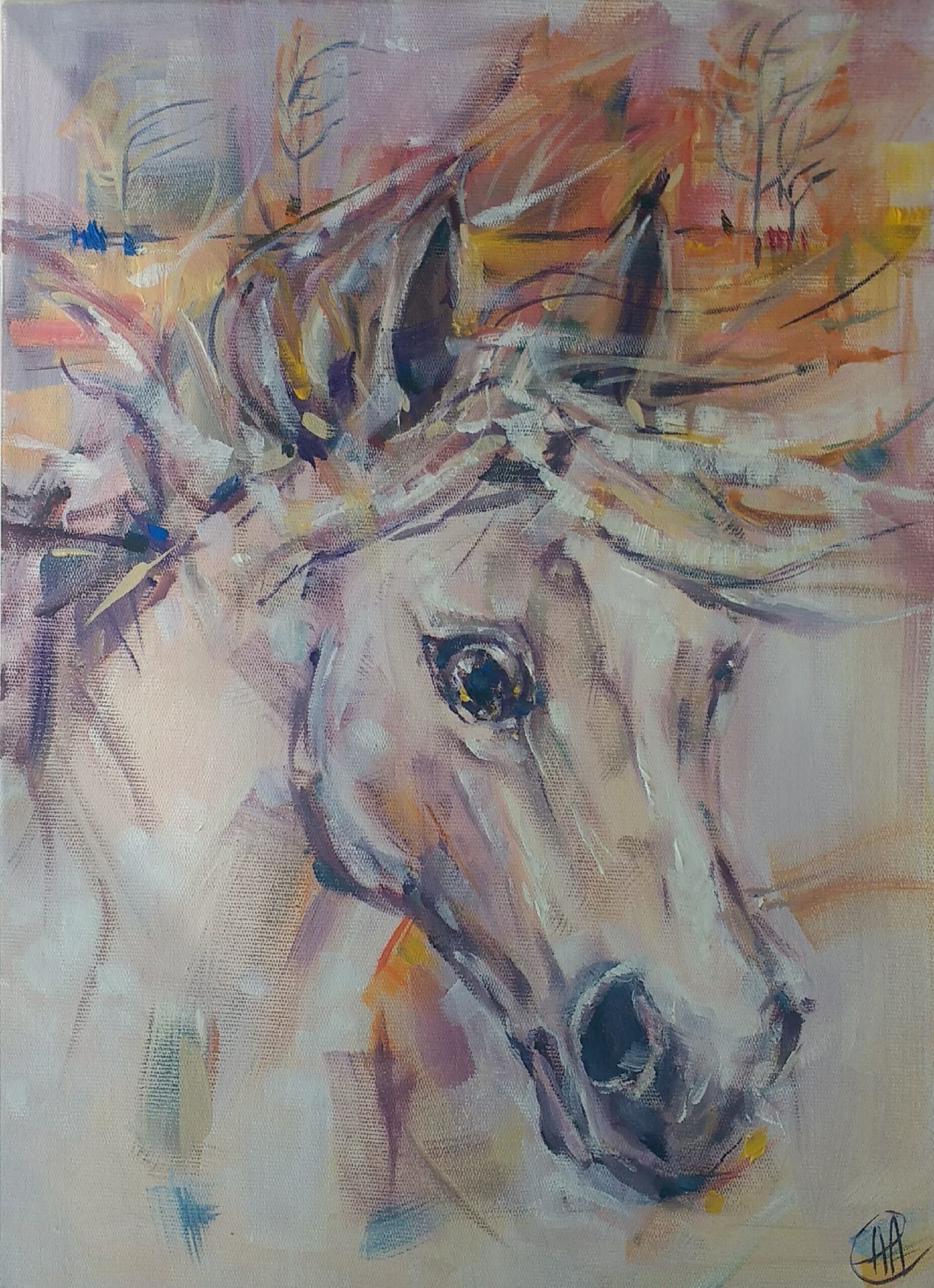
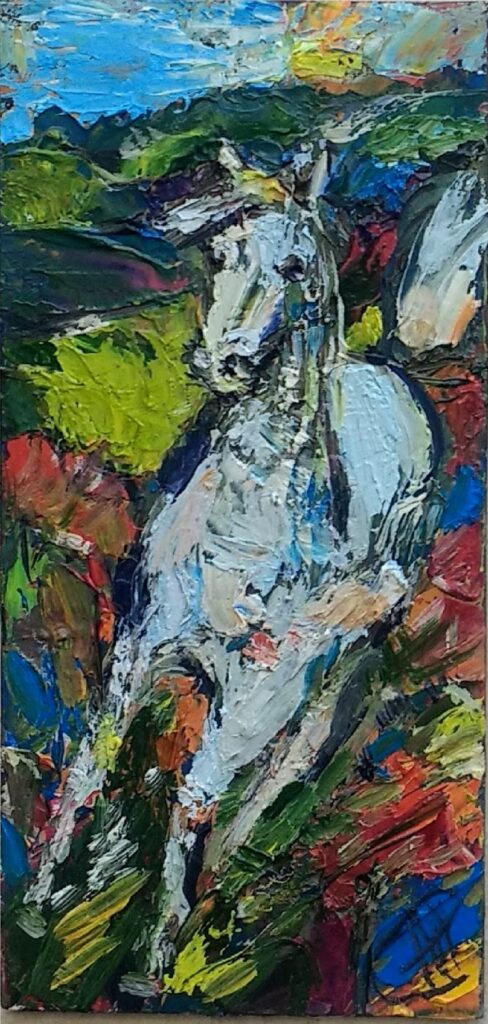
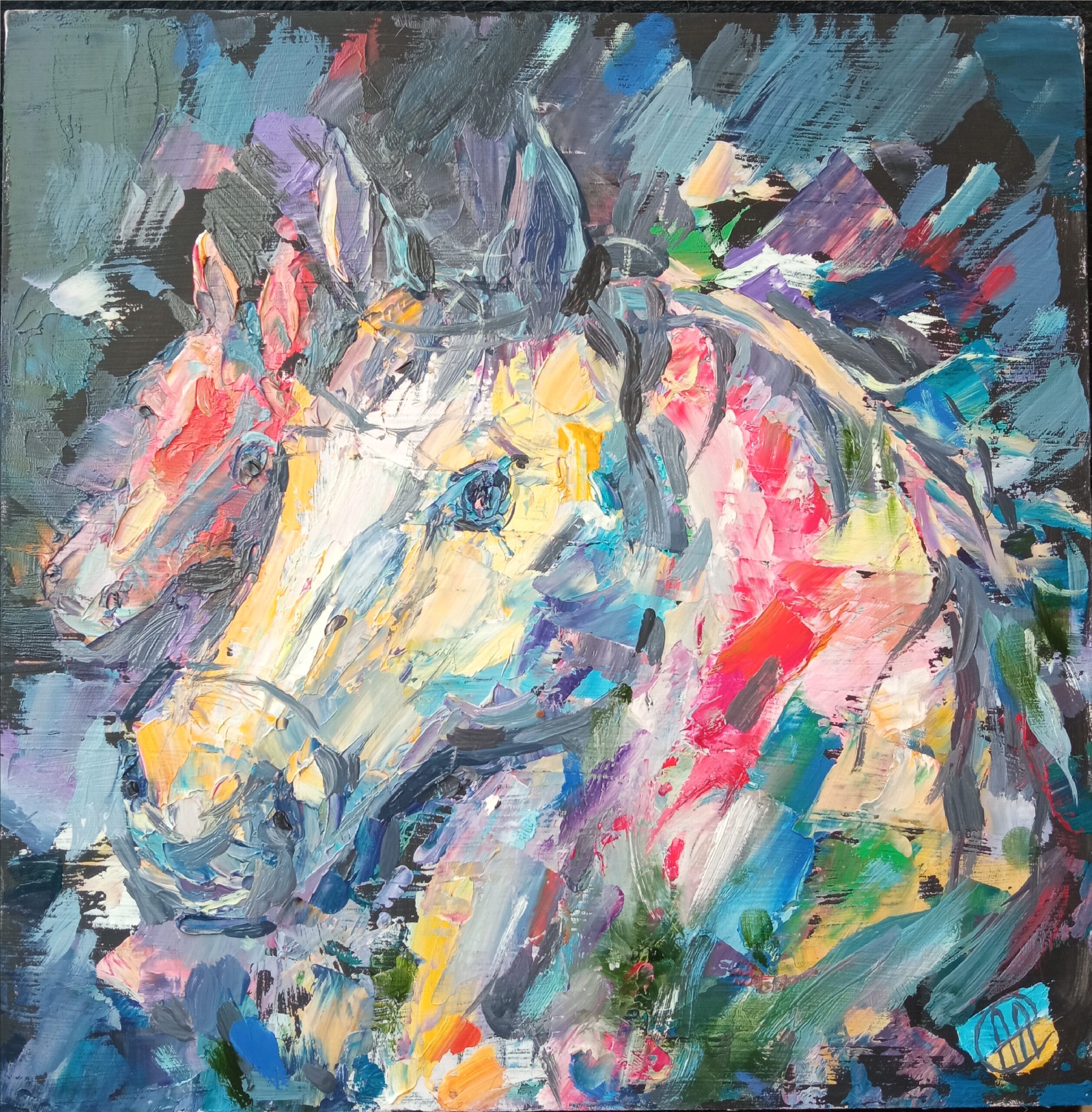
I loved horses from early childhood.
For many years, I practiced horseback riding and cared for horses daily — grooming, cleaning, feeding, washing them, swimming together in the river. I trained my own mare myself, learning patience, responsibility, and trust.
Those years shaped my sense of rhythm, balance, and respect for living beings.
Time passed. Life changed.
Today, owning and caring for a horse is no longer possible — though the dream remains. As children, my closest friend and I dreamed of having horses together. A kindred soul who loved them as deeply as I did. That connection still lives quietly inside me.
When horses appear in my paintings, they are not literal portraits.
They are memory, movement, fire, and freedom — echoes of a lived experience transformed into art.
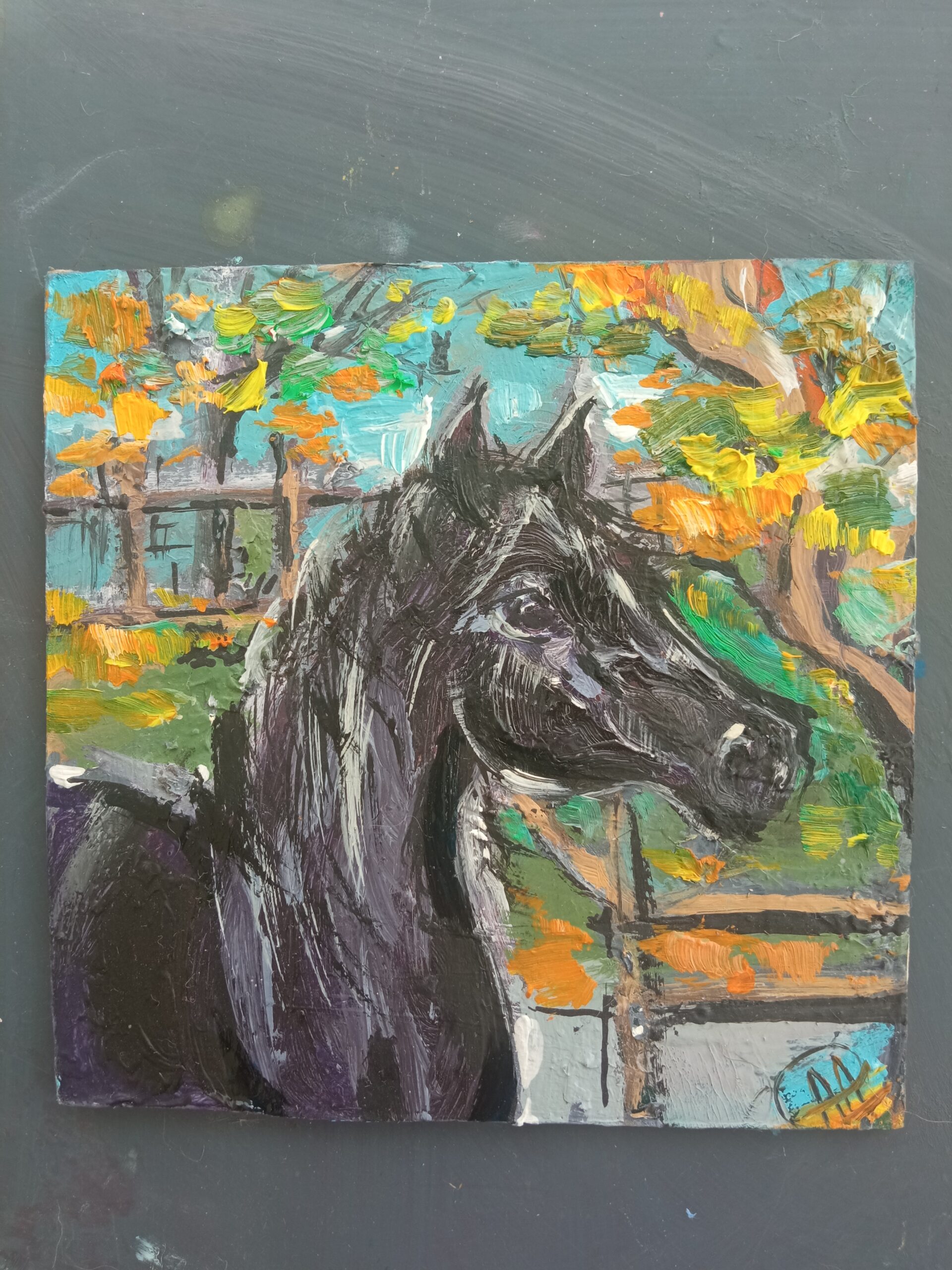
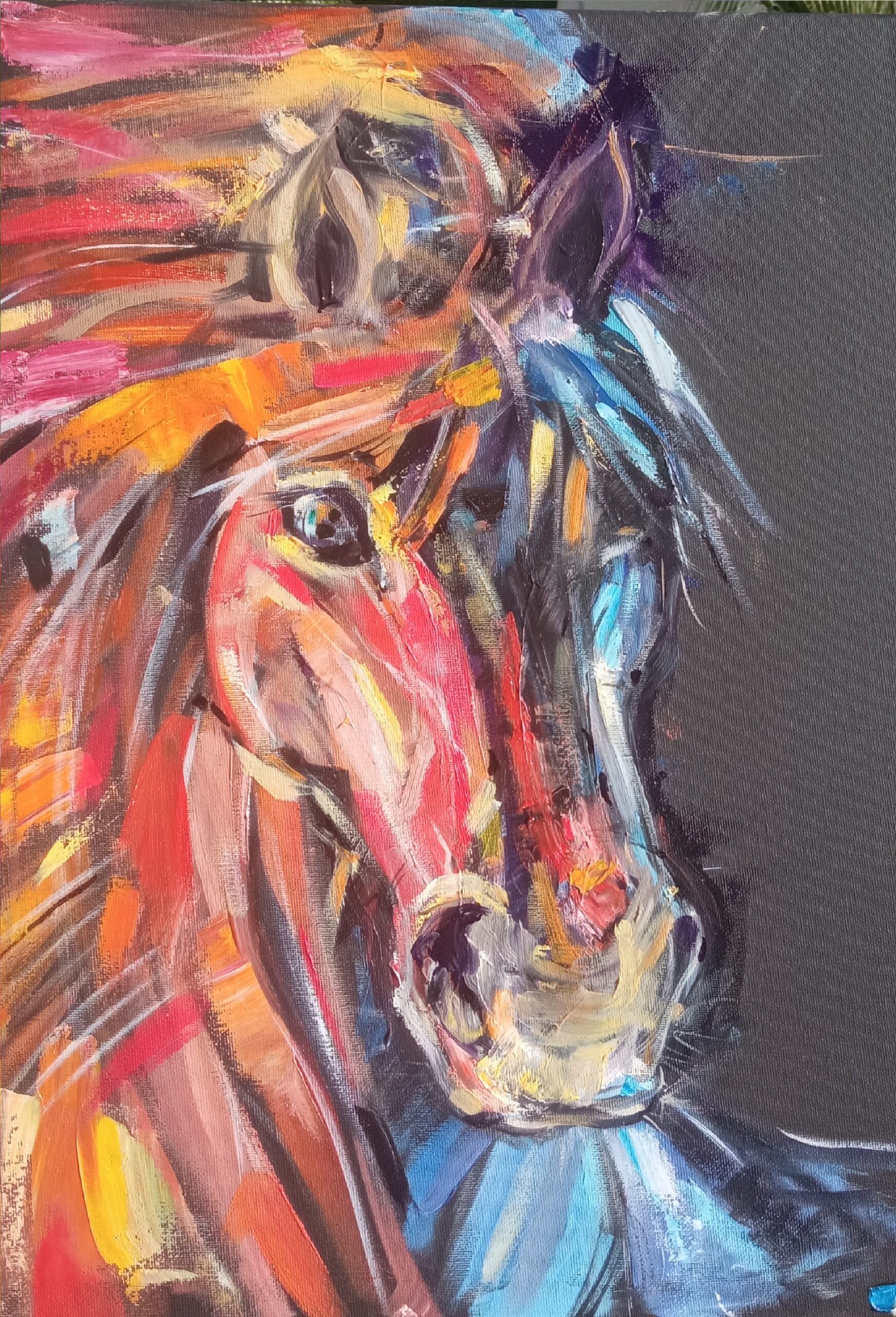
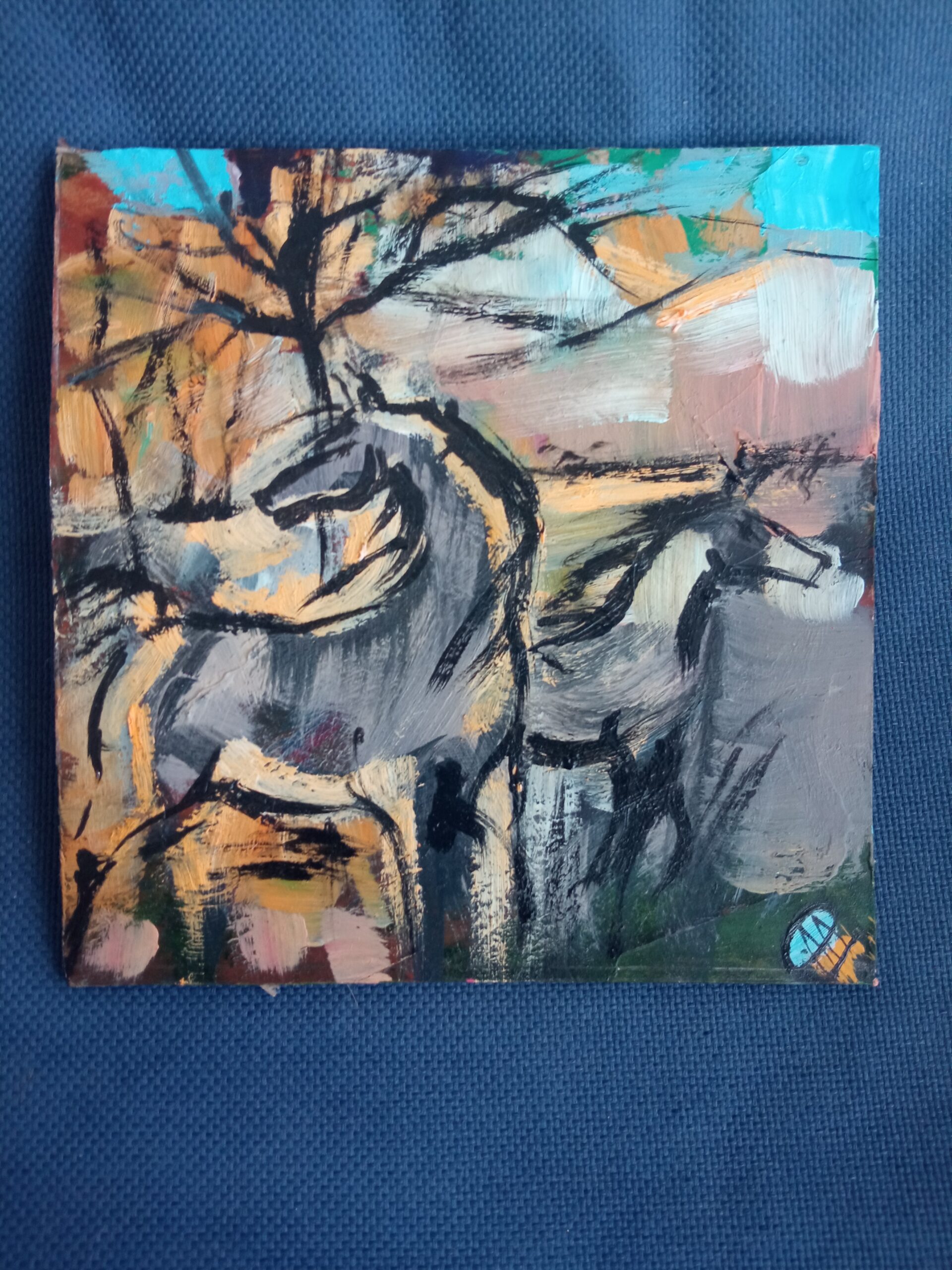
Some of my works explore this theme directly; others carry it symbolically through color, gesture, and energy. Limited reproductions and prints allow collectors to engage with this theme in an accessible way, while preserving the uniqueness of original works.
Why Collectors Continue to Choose Horse Art
For collectors and galleries, horse paintings offer:
- timeless symbolism
- emotional depth
- strong visual presence
- cross-cultural resonance
- long-term artistic value
A horse painting is never just decoration.
It is story, movement, and soul.
The Year of the Fiery Horse: A Meaningful Beginning
This year invites us to move forward with dignity rather than noise.
To burn away the unnecessary.
To keep what is true.
For artists — a year of honest work.
For collectors — a year of conscious choice.
For all of us — a year of inner freedom.
The Fiery Horse is already in motion.
Written for collectors, artists, and galleries
by UAlinArt