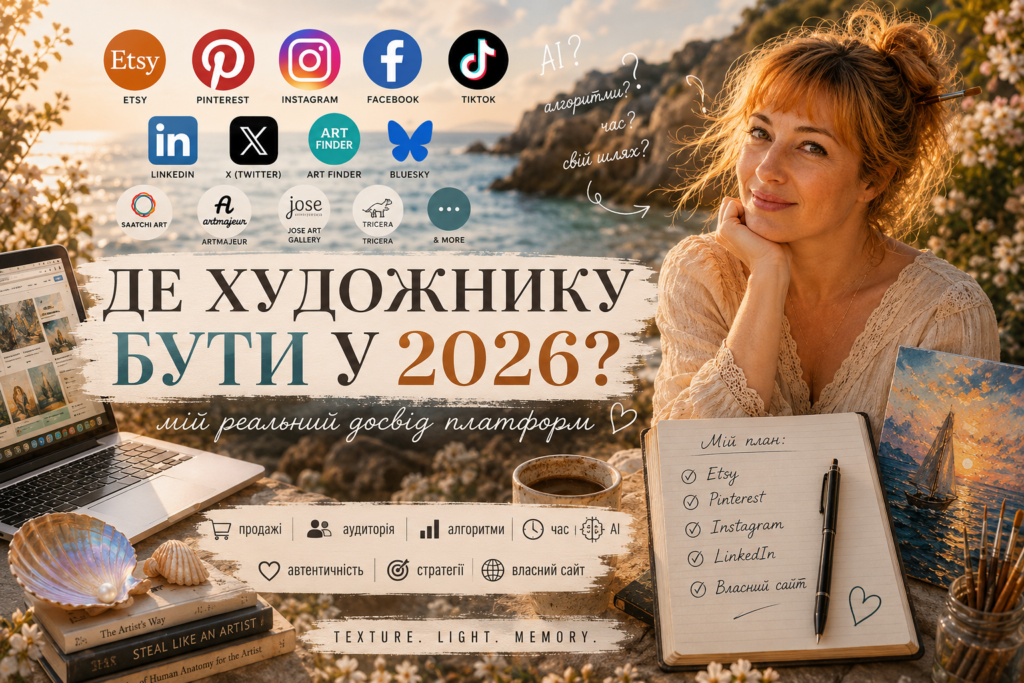
My Real Etsy — Still One of the Most Alive Platforms for Artists with Etsy, Pinterest, LinkedIn, AI & Online Galleries
How to survive algorithms, social media and online platforms without losing your artistic voice.
Today, loving painting is no longer enough.
Wanting to create is not enough either.
Even painting well is no longer enough.
To leave a mark,to influence the world around you,or simply to earn a living as an artist — today you need much more than artistic skill.
You need to understand platforms.
Algorithms.
Attention spans.
Presentation.
Audience psychology.
Sometimes modern artists feel like they must become marketers, bloggers, photographers and strategists all at once.
And somewhere in all of this, the most important thing becomes not losing yourself.
This article is not a “top platforms ranking.”
It is simply my honest experience as a Ukrainian artist working between Ukraine and Turkey, trying to build an artistic life online without turning into a content machine.
Etsy — Still One of the Most Alive Platforms for Artists
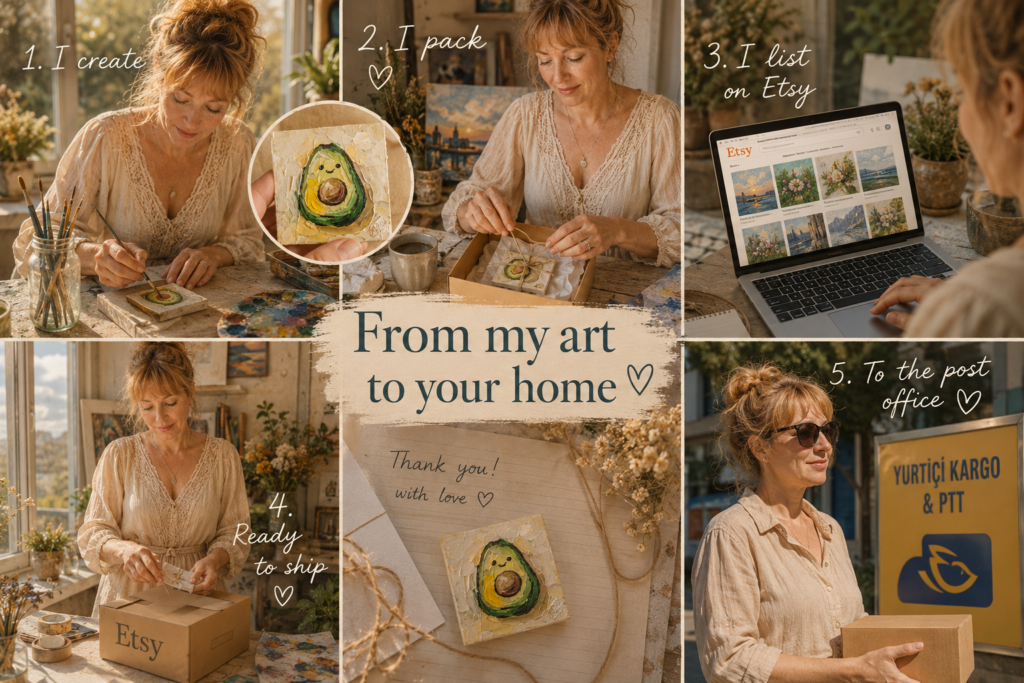
For me, Etsy is still primarily about real sales.
Yes, competition is huge.Yes, algorithms constantly change.And yes — sometimes it feels like you spend more time photographing, packaging and optimizing listings than actually painting.
But Etsy still has something many platforms lost:
people searching intentionally for handmade work.
My biggest realization was this:
People rarely buy “just a painting.”
They buy:
- atmosphere
- emotion
- memory
- texture
- warmth
- a feeling of home
Especially now.
After years of endless digital noise, many people crave objects that feel human again.
And on Etsy, presentation matters enormously:
- lighting
- photography
- storytelling
- consistency
- mood
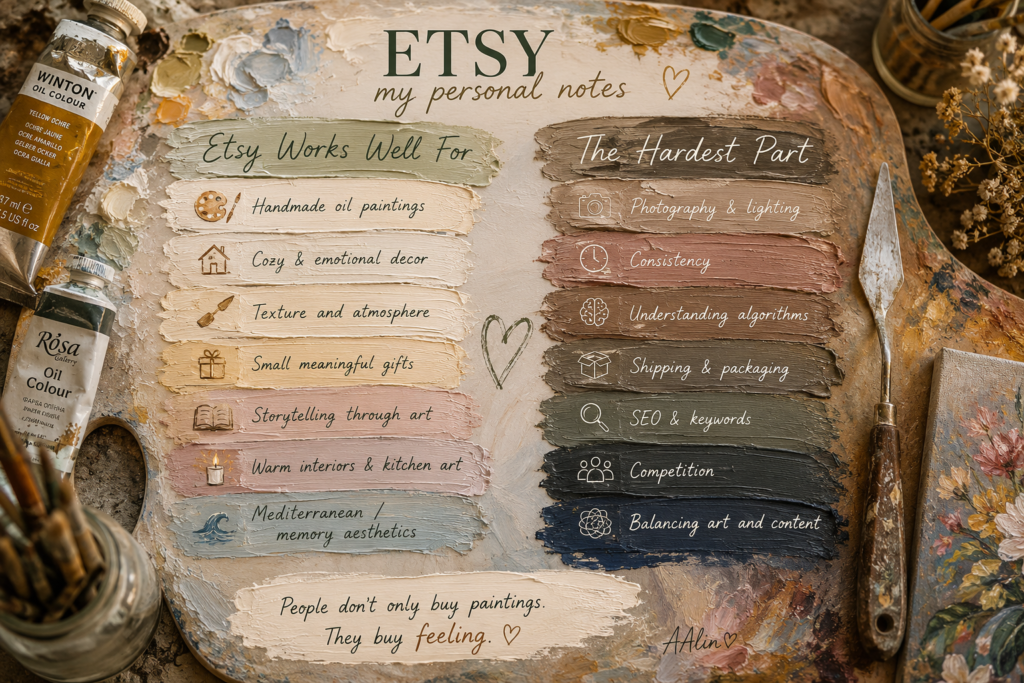
The algorithm notices these things too.
One important insight from my own experience: Pinterest and Etsy work surprisingly well together.
Pinterest brings slower but warmer traffic.Not viral attention — but people genuinely interested in interiors, art and atmosphere.
And honestly, I value that much more.
Pinterest — The Most Underrated Platform for Artists
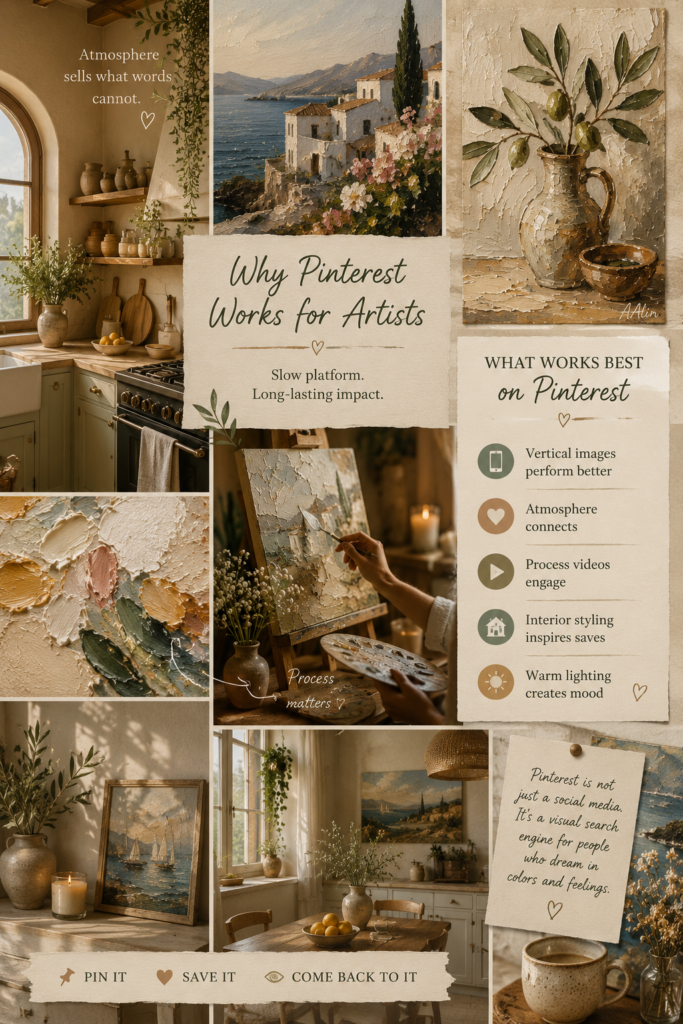
Pinterest feels very different from most social media.
It does not scream for attention.
It works slowly. Quietly.
But sometimes for years.
Especially for:
- decor art
- kitchen art
- Mediterranean aesthetics
- textured oil paintings
- interiors
- cozy atmosphere
- process videos
Pinterest behaves more like a visual search engine than a traditional social platform.
And this changes everything.
Instead of fighting for seconds of attention, your artwork can continue circulating quietly over time.
One of my personal discoveries: vertical atmospheric videos often perform better there than static images.
Not because they are “viral,”
but because they create mood.
And mood is incredibly important for art.
Instagram — Beautiful, Fast… and Exhausting
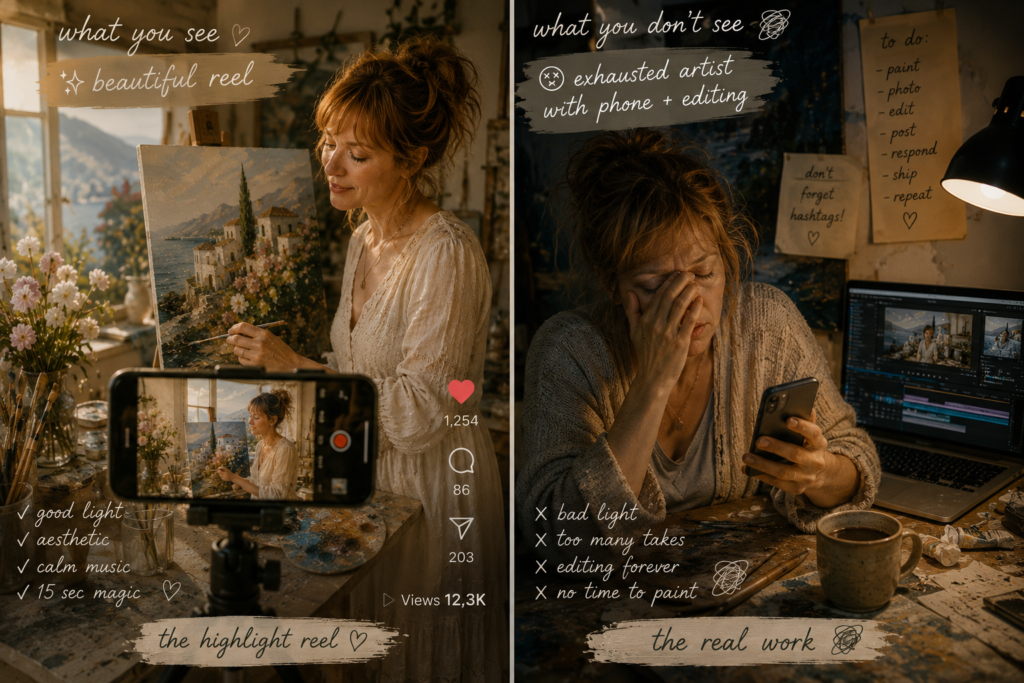
Instagram is still useful for artists.
But personally, it never brought me many direct sales.
For me it works mostly as:
- a portfolio
- a visual diary
- proof of artistic presence
- a place where people can see the human behind the paintings
And today this matters a lot.
People want to connect not only with artwork, but with the artist’s life, process and personality.
At the same time, Instagram can become exhausting very quickly.
Reels.
Engagement pressure.
Constant visibility.
Endless posting.
Sometimes it feels as if art itself becomes secondary to content production.
And honestly, this is one of the biggest questions artists face today:
Are we still creating art?Or are we slowly becoming full-time content creators talking about art?
I think many artists quietly struggle with this.
Facebook — Still More Human Than People Think
Facebook is often treated as outdated.
But strangely enough, I still find warmth there.
Especially in:
- niche communities
- local group
- solder audiences
- collectors who actually read texts
Facebook still has traces of something rare online today: human conversation.
Of course, toxic spaces exist everywhere.And artists should protect not only their time — but also their mental energy.
Sometimes leaving certain online spaces is healthier than trying to “win” them.
TikTok — Massive Reach, Tiny Attention Span
TikTok can generate incredible visibility.
Especially for:
- process videos
- emotional hooks
- satisfying textures
- fast transformations
But personally, I often feel that art there survives only for a few seconds.
It is a platform built for speed.
And while it can absolutely help artists grow visibility, I sometimes miss silence and depth there.
Still, short atmospheric videos can work beautifully if used carefully.
Especially when they feel authentic rather than overly optimized.
LinkedIn — My Most Unexpected Discovery
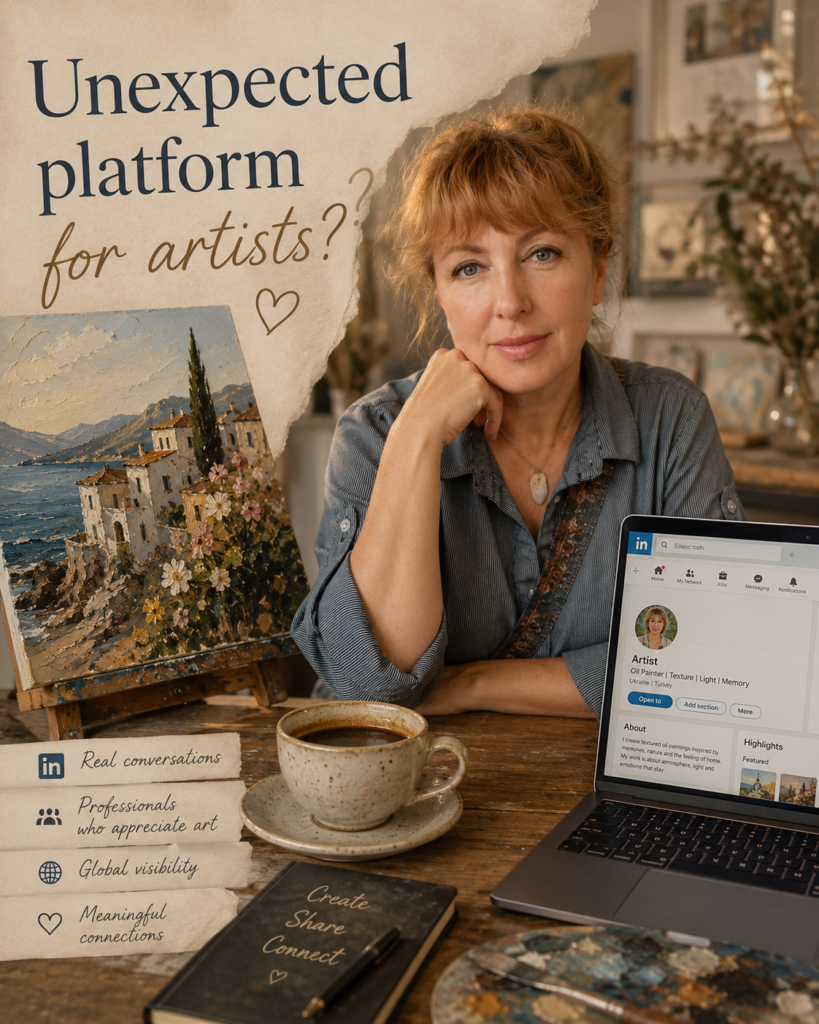
Honestly, I never expected LinkedIn to become interesting to me as an artist.
For years I thought it belonged only to:
- office culture
- corporate life
- resumes
- networking
But then I suddenly realized something.
LinkedIn has:
- architects
- interior designers
- hotel industry professionals
- developers
- creative directors
- people shaping physical and emotional spaces
And most importantly:
People there still read.
For artists, this is becoming increasingly rare.
LinkedIn is not Instagram.
It does not reward constant perfection and aesthetic overload in the same way.
But it allows thoughtful conversations.
And if your goals include not only selling paintings, but also sharing culture, identity, memory and atmosphere — LinkedIn becomes surprisingly interesting.
Especially for Ukrainian artists today.
Because cultural visibility matters too. Sometimes art online is not only about commerce. Sometimes it is also about presence.
International Art Platforms
Jose Art Gallery
I have not had sales there yet.
But it genuinely makes me happy that it is a Ukrainian platform growing internationally.
Today Ukrainian art is not only about business. It is also about cultural representation. And that matters deeply to me.
Saatchi Art
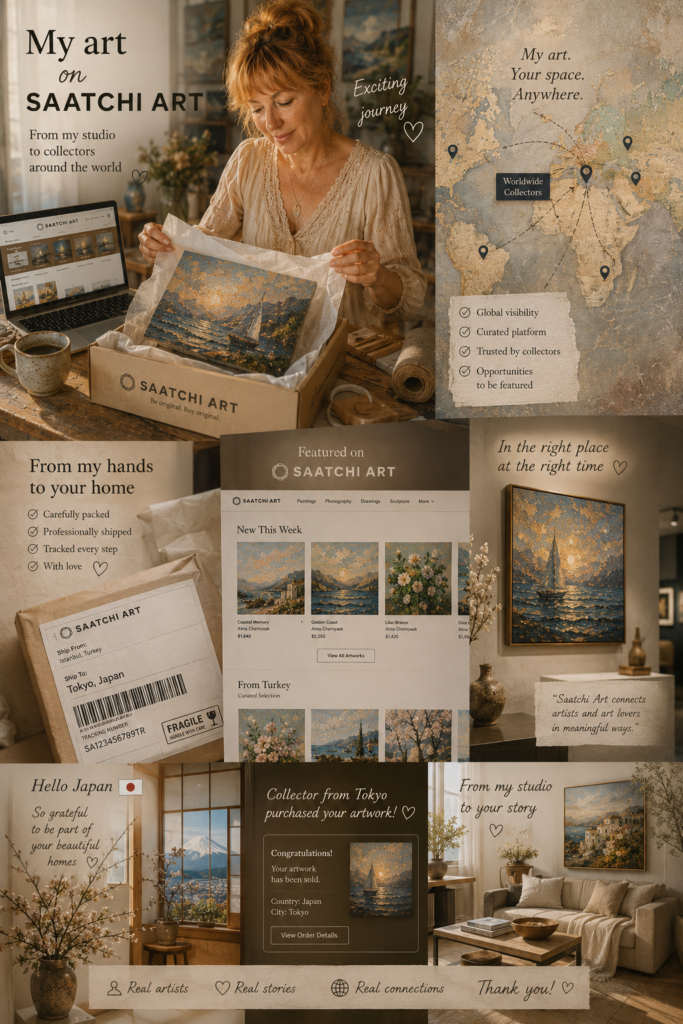
Saatchi Art gave me a very warm experience overall.
Sales there rare — but real.
I also appreciate:
- professional structure
- smooth payment systems
- international gallery feeling
Activity there feels slower now than years ago, and because of this I also became less active myself.
Still, simply existing inside a respected international gallery space can already be valuable.
Like a permanent virtual exhibition.
Artmajeur
Artmajeur was interesting for a different reason.
Not because of sales. (sales rare, but was)
But because sometimes I found unexpectedly smart ideas there regarding artistic positioning and visibility.
At one point they even suggested: “Create your own Wikipedia page.”
🤔😊 And honestly… why not?
Modern artists today are not building only paintings. They are also building long-term cultural presence.
Daily Paintworks
This was one of the few platforms I actually paid for.
And perhaps buyers truly came from there.
But eventually I stopped.
Because over time I realized that Pinterest was giving me significantly more potential visibility almost for free.
And this became another important lesson:
Sometimes the most valuable resource artists have is not money.
It is energy and attention.
AI and Artists
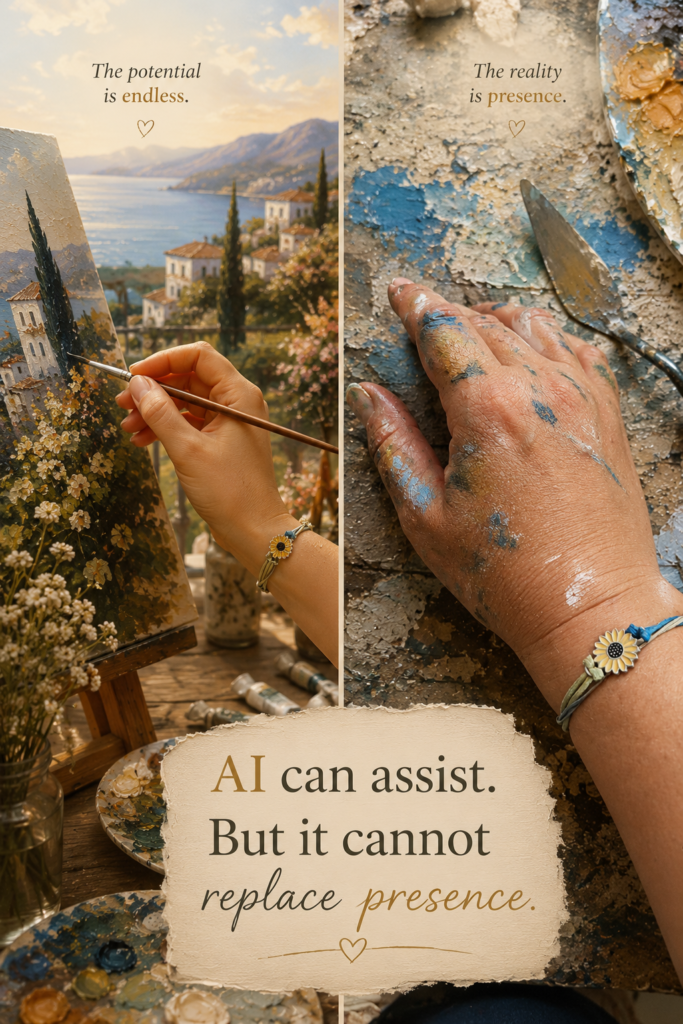
AI is impossible to ignore today.
Personally, I do not see AI as “the death of art.”
For me, it is a tool.
AI can:
- save timehelp
- analyze platforms
- assist with strategy
- generate ideas
- support writing and planning
And honestly, sometimes it can even help artists better understand themselves.
But AI cannot replace:
- human memory
- texture
- accidental brushstrokes
- material presence
- imperfect movement
- the feeling of real paint
And maybe this is exactly why physical art feels increasingly valuable now.
Because it carries traces of a living person.
The Most Important Thing: Artists Do Not Need to Be Everywhere
At the beginning, I tried to do everything.
Every platform. Every trend. Every social network. And eventually, it became exhausting.
Now I feel as if I am slowly gathering those scattered pieces of energy back together.
If I had to summarize my personal conclusions very simply:
- Etsy = income
- Saatchi = status and visibility
- Pinterest + Etsy = powerful combination
- Instagram/Facebook = human presence
- LinkedIn = future potential for thoughtful artistic visibility
Everything else becomes optional.
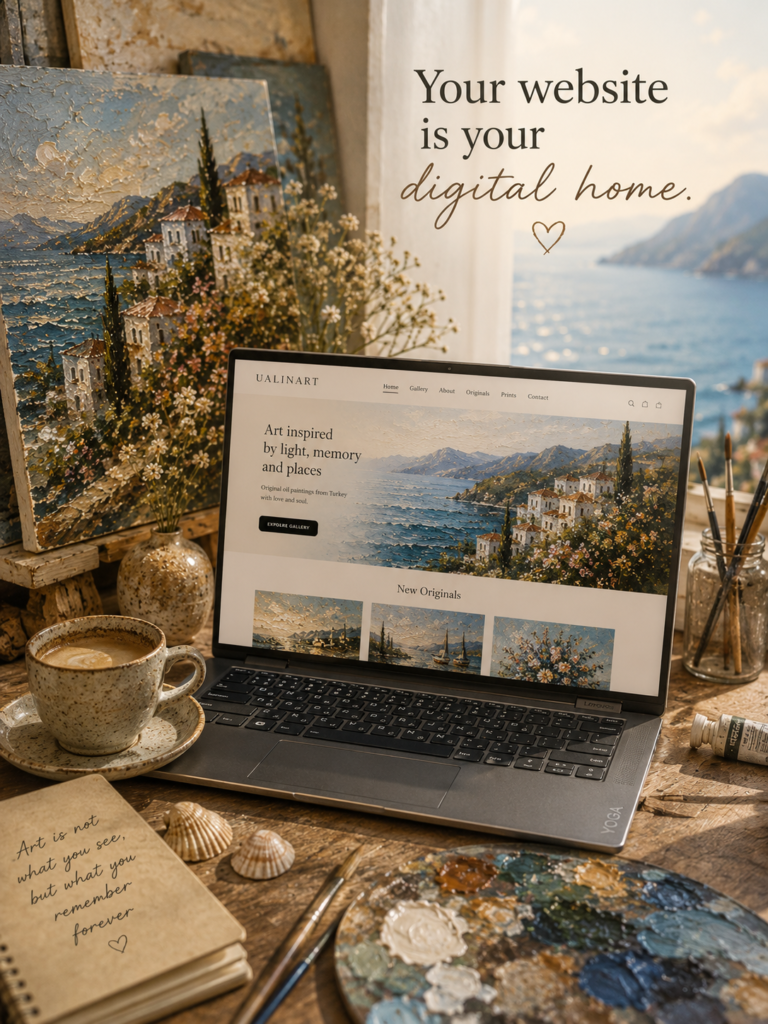
Even a personal website may not be necessary immediately.
But eventually… it becomes incredibly important.
Because algorithms change.
Platforms disappear.
Trends collapse.
But your own website remains your own space.
A place where your voice does not depend entirely on someone else’s system.
Final Thoughts
I no longer think artists need to be everywhereI think artists need to build their own world.
I think artists need to build their own world.
Slowly.
Honestly.
Consistently.
And leave space inside it for:
Texture.
Light.
Memory.
PS: Personal Website — Your Digital Home
For a long time, I treated my website almost like an optional extra.
Something “nice to have later.”
But the more time passes, the more I understand how important it really is.
Because platforms change. Algorithms change. Sometimes entire websites disappear. But your own website remains your space. A place where:
- your work is not fighting endless noise,
- your words are not limited by trends,
- and your artistic world can exist more quietly and deeply.
Social media is fast.
A website is slower.
And maybe that is exactly why it matters.
For me, a personal website is not only about sales anymore.
It is:
- an archive,
- a portfolio,
- a memory space,
- and a place where my artistic voice feels the most complete.
Especially today, when so much online content disappears after a few seconds, having a space that truly belongs to you becomes incredibly valuable.
Not because every artist must immediately build a perfect website.
But because over time, artists deserve a place online that feels like home — not only another algorithm.
- And most importantly: